Guided Elk Hunt vs DIY Elk Hunting for Beginners
There Are Only So Many Elk Seasons — Why Not Get a Head Start?
Over the last several years, one of the biggest trends in hunting has been the rise of the “Do It Yourself” elk hunt. Of course, hunters have been venturing into the mountains on their own long before social media and YouTube ever existed. But today, the idea of loading up the truck, heading west with a tag in your pocket, and chasing bugling bulls in the mountains has exploded in popularity. It is honestly easy to understand why.
Western elk hunting represents adventure. Freedom. Challenge. For many hunters, it’s the ultimate North American hunt.
But with that rise in popularity has also come something else:
A growing number of hunters who are passionate, motivated, and willing to work hard, but completely overwhelmed once they actually arrive in elk country. Not because they lack effort, not because they lack grit, but because elk hunting has a learning curve most people underestimate.
Another major shift in hunting over the last several years has been the explosion of high-tech gear. Every season brings new lightweight packs, breathable layering systems, ultralight shelters, optics, and new mapping technology; All designed to help hunters go farther, stay longer, and perform better in some of the toughest terrain in North America with an elk quarter strapped to their back.
The problem is, there are now so many different directions a hunter can go depending on the style of hunt they plan to pursue.
A hunter backpacking deep into wilderness country needs a completely different setup than someone hunting from a ranch camp or vehicle-access unit. That often leads to countless hours spent on YouTube, forums, and gear reviews trying to figure out what equipment is truly necessary for the backcountry. Most of that information comes from experienced hunters who have spent years solving those same problems through trial and error. The reality is, many hunters do not fully understand the value—or limitations—of certain gear until those problems present themselves in the field.
Then comes one of the most confusing parts of the entire process: deciding where to hunt and how to acquire a tag.
Every western state operates differently. Some states, like New Mexico, use lottery draw systems, while states such as Colorado, Wyoming, and Montana use preference point systems. Once hunters start researching draw odds, point creep, OTC opportunities, and season structures, the process can become overwhelming very quickly. One of the best ways to start making sense of it all, outside of speaking directly with state game agencies, is simply reaching out to a reputable local outfitter.
Whether you ever book a hunt with them or not, experienced outfitters can often help new hunters better understand:
draw systems
season timing
terrain expectations
physical preparation
and what type of hunt best fits their goals
That kind of firsthand knowledge can dramatically shorten the learning curve and help hunters spend their time and money more wisely.
Before I get into the meat and potatoes, lets talk the true number behind you getting an elk in the west on your first few years. For a beginner coming out West DIY, the odds of killing an elk in the first year or two are generally under 5% - 6% in most western units. Now, if you booked with a reputable Outfitter, the hunt heavily tilts the odds in your favor. The average percentage across the west boasting public land and private access seeing roughly 50% to 65%+ success/opportunity rates.
That difference simply comes down to experience.
Guides have already spent years learning the mistakes new hunters don’t even know exist yet—things like thermals, when to push timber, how to approach a bull, and how elk react to pressure. Elk hunting is not rocket science, and plenty of hunters eventually figure it out on their own. But like anything else in life, there’s value in learning from people who already understand the process.
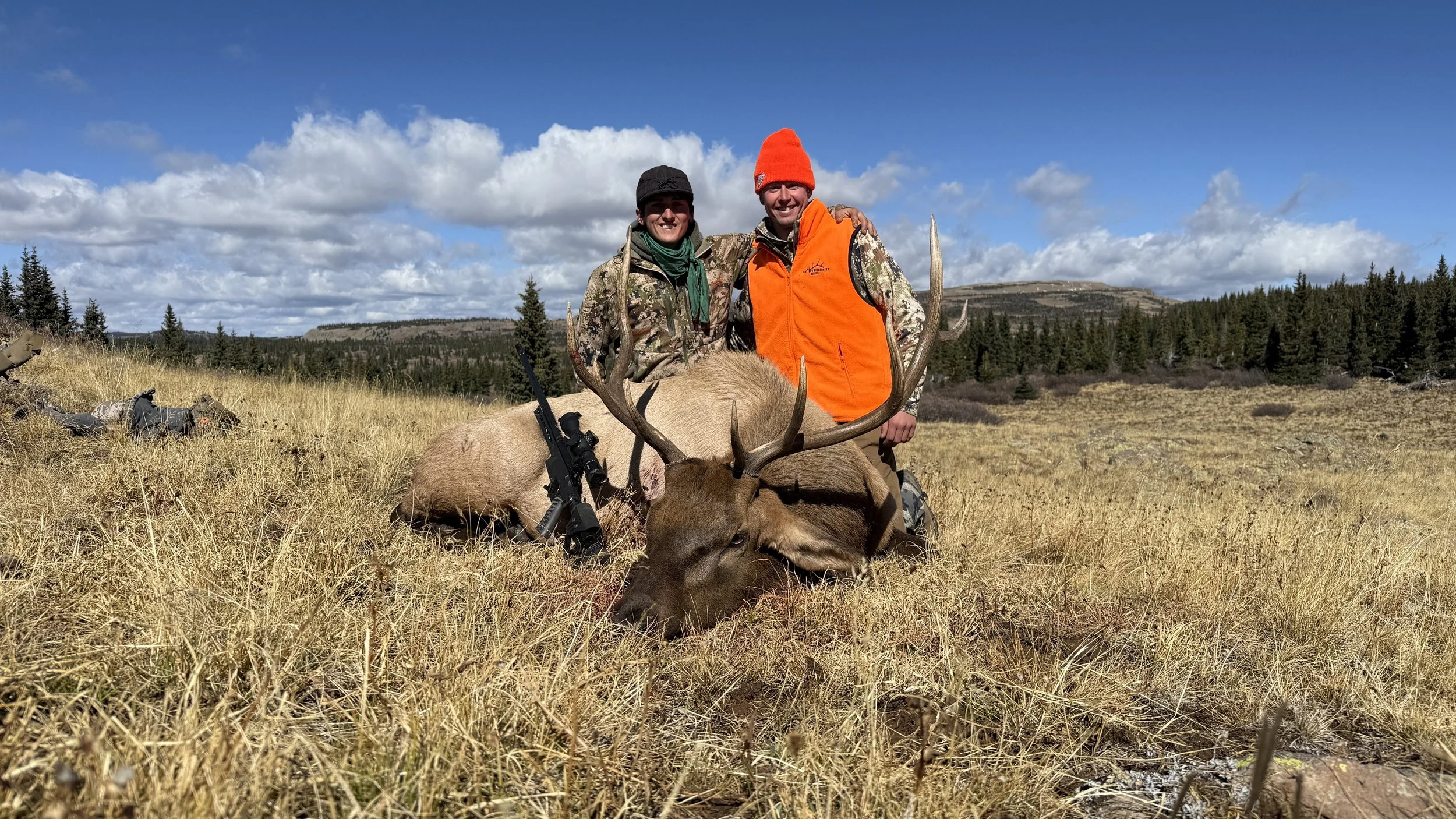
Tommy Sine and his 2025 1st Rifle Bull Flat Tops Wilderness Guides
Let’s break down what it realistically takes to go on your first western elk hunt DIY.
First off, you do NOT need the most expensive gear to start elk hunting. A lot of new hunters overspend before they even understand what type of hunt they want to pursue.
Using average market pricing from sources like GOHUNT, along with estimated tag, fuel, and hotel costs, we put together a rough breakdown for a first-time hunter traveling from Pennsylvania out West.
You do not need every item listed below, but it gives a realistic picture of how quickly costs can add up before ever stepping into elk country.
Backpack $550-$850 ($700)
Sleeping Bag $300-$650 ($400)
Sleeping Pad $37-$200 ($100)
Tent $300-$1000 ($450)
Cook Stove $60-$140 ($100)
Food $14×10 meals $140
Water Filtration $30
Game Bags $80-$100 ($80)
Boots $300-$500 ($400)
Rifle/Bow $400-$2200 ($1200)
Chargers $50-$150 ($100)
Trekking Poles $50
Binos $500-$1200 ($750)
Spotter $1200-$2000 ($1200)
Tag (state dependent) $500 (Washington)-$1500(Utah) ($1000)
Gas (85 unleaded 2015 F-150) $420-$580 one way, ($1000)
Hotel (if only staying in arrival and departure) $200
This brings the grand total, DIY: $7900, no guarantee of opportunity.
Now let us compare an outfitted hunt, where you need to bring the tag, weapon, boots, and a good attitude. This is usually the average hunt duration and price for affordable, ranch or public land elk hunt in the west. Tag fee not included with the outfitter pricing most of the time.
Five-day, one-on-one guiding
Private 3,500-acre ranch and adjacent federal land
Off-road transportation
Field dressing and transport to butcher/trophy preparer
Horse retrieval service
Six nights room and board at Loco Mountain Lodge
Hunt price $6600
Tag Price $845
Grand Total: $7445 (again these are just average prices across the west)